Summary
- Hounslow approved the Heathrow Estate outline application on 6 August for a datacentre and replacement SME space.
- Planning documents indicate 64MW of electricity demand, 48MW of IT load and up to 50,000 square metres across three datacentre buildings.
- Outline consent moves the project forward, but reserved matters, an eventual operator and delivery of the required power still sit between permission and operating capacity.
Heathrow Estate has received outline planning approval for a large datacentre redevelopment in Hounslow, with documents setting out a scheme requiring around 64MW of electricity to support 48MW of IT load.
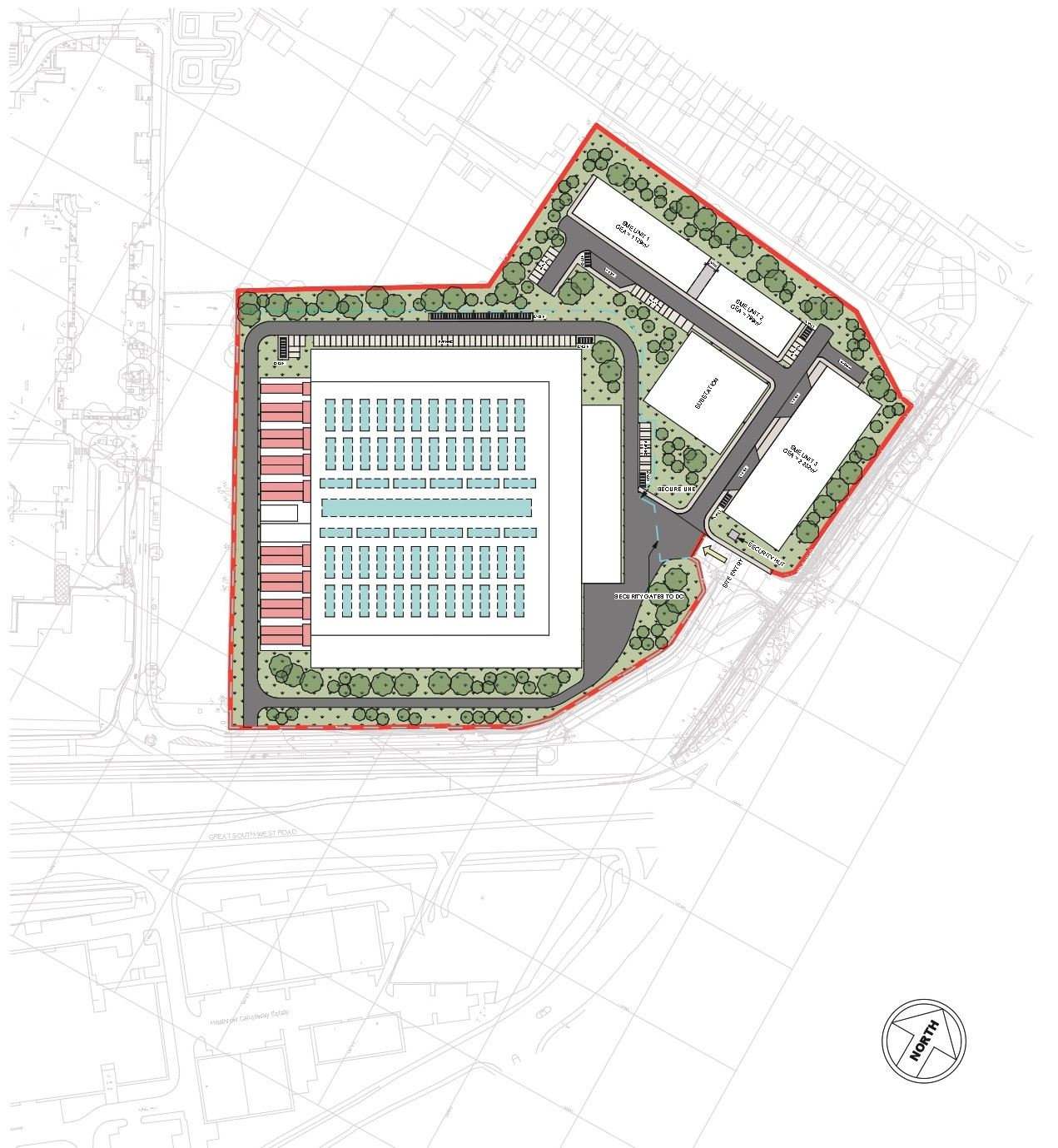
Hounslow’s planning committee approved application P/2025/3669 on 6 August for the Silver Jubilee Way site, which is currently occupied by a multi-let industrial estate. The proposal allows for three datacentre buildings covering up to about 50,000 square metres alongside replacement SME space.
The scheme has been brought forward by Brixton (Heathrow Estate) Ltd, which has stated in planning material that it is not itself a datacentre operator. A future operator is expected to develop its own detailed design through the reserved-matters process, so the approval establishes the development envelope rather than a finished technical specification.
That distinction also applies to the electricity figure. The 64MW requirement and 48MW IT load are planning assumptions around the proposed development, not energised capacity already available to customers, while a target PUE of 1.35 provides an intended efficiency level rather than operating evidence from a completed facility.
Planning consent and grid delivery are separate
London’s datacentre pipeline has made that difference more important as developers seek large electricity connections around existing digital-infrastructure clusters. Ofgem has been examining how speculative projects can occupy positions in connection queues even where their probability of construction is uncertain, leaving network planners to distinguish credible future demand from capacity that may never be used.
Outline planning permission gives Heathrow Estate more substance than an unconsented land proposal, although power delivery still depends on network arrangements and the eventual operating design. A project can clear the local planning process while facing a different timetable for electricity infrastructure, particularly when requested loads are large enough to require upstream reinforcement.
The location also illustrates the changing use of industrial land around London. Converting warehouses and smaller commercial units into compute can increase capital investment and business-rate income, but the employment profile differs from conventional industrial estates, while high electricity demand links the site more directly to regional infrastructure constraints.
The project team says redevelopment would increase green space from 5% to 20%, deliver replacement SME units and target BREEAM Excellent. Those remain commitments attached to the proposed design rather than measured outcomes, and they will have to survive the detailed design and construction stages if the project proceeds.
Delivery will determine the useful capacity
Water and cooling will require the same project-specific scrutiny. Datacentres elsewhere have attracted attention for water consumption, although requirements vary widely between designs, and there is little value in applying figures from unrelated facilities to Heathrow Estate before its eventual operator has settled the cooling architecture.
Likewise, AI demand can explain why developers are seeking larger sites without establishing who will occupy this one. A named operator, reserved-matters application and firm construction timetable would provide stronger evidence of how the planning envelope is likely to translate into usable capacity.
Hounslow’s approval therefore advances a real development without resolving the questions that have become central to London’s datacentre market. The site has a permission and a defined power requirement; it still needs an operator, detailed engineering, grid delivery and customers.
As more of west London’s industrial land is proposed for compute infrastructure, those distinctions will determine which projects add genuine digital capacity and which remain permissions on paper. Heathrow Estate has crossed the planning threshold, but the more capital-intensive part of the development now begins.